Eating Out on a Calorie Goal: How to Read a Restaurant Menu
By Daniel · · 8 min read
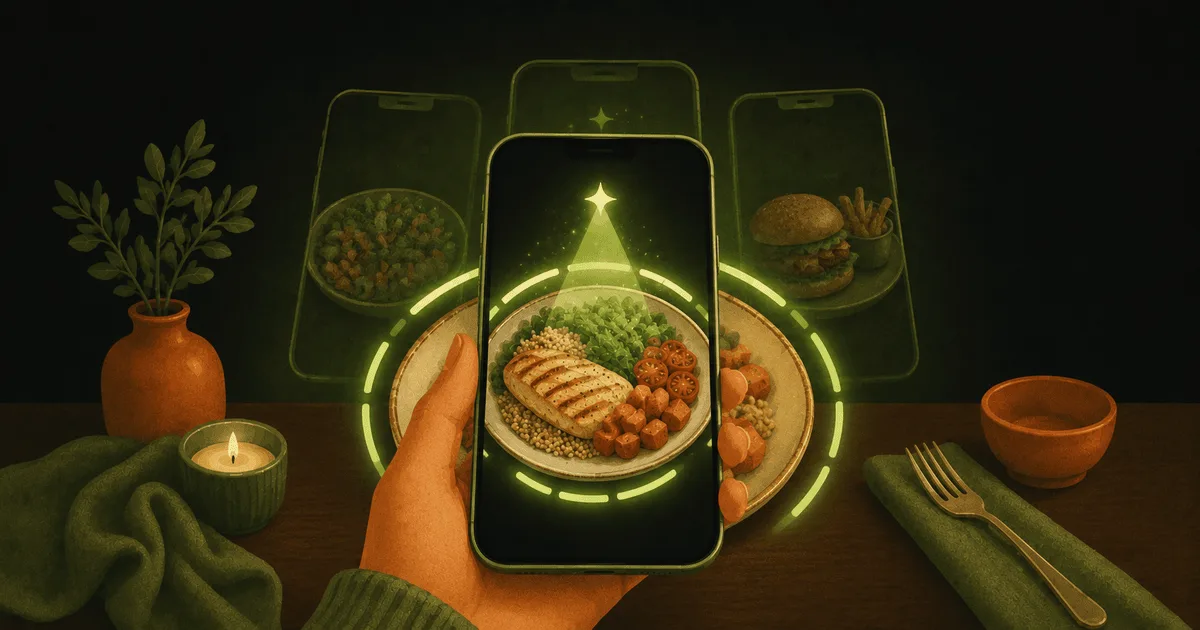
The short answer. Decide before you’re hungry: look at the menu online and check how much of your day is left. On the menu, fried, crispy, battered, creamy, au gratin and buttery usually mean more fat; grilled, steamed, roasted, poached and tomato-based usually mean less. Ask for sauces and dressings on the side, swap fries for salad or vegetables, share a starter or a dessert, and count your drinks. Then log the closest match and treat the number as an estimate. Or photograph the menu in Swoodie and see which dishes fit what’s left of your day.
Eating out doesn’t have to break a calorie goal, and one meal never decides how a week goes. The tricky part is that you can’t see the kitchen: you don’t know how much butter went into the pan or how big the portion will be. The good news is that the menu tells you more than it seems. This guide shows you how to read it, what to ask for, and how to log the meal afterwards without stressing over every gram.
Before you go: two minutes of planning
- Look at the menu online. Choosing at home, when you’re not hungry and nobody is waiting for your order, is much easier than choosing at the table.
- Check what’s left of your day. If you know dinner out is coming, a lighter breakfast or lunch leaves room for it. Not sure what your daily number is? Our free TDEE calculator gives you a starting point.
- Don’t arrive starving. A normal meal earlier in the day makes the bread basket much less tempting than skipping lunch does.
Menu words that tell you how a dish is cooked
Menus describe dishes to sell them, and the selling words are often cooking words. They’re not a guarantee, but they are a good first filter.
| Usually more fat | Usually less fat |
|---|---|
| Fried, deep-fried, crispy, crunchy | Grilled, broiled, chargrilled |
| Battered, breaded, tempura, schnitzel | Steamed, poached |
| Creamy, cream sauce, alfredo, carbonara | Tomato-based, marinara, salsa |
| Au gratin, cheesy, loaded, smothered | Roasted, baked |
| Buttery, butter-basted, garlic butter | Broth, clear soup |
| Glazed, candied, honey-glazed | With salad or seasonal vegetables |
When a description says nothing about the cooking, ask. “Is the fish grilled or fried?” and “Is there cream in the soup?” are normal questions, and most kitchens are used to them.
What the difference looks like in numbers
The same food can land far apart depending on how it’s cooked and what it’s served with. Values per 100 g, from USDA FoodData Central:
| Richer choice | kcal | Lighter choice | kcal |
|---|---|---|---|
| Chicken breast, fried in batter, with skin | 260 | Chicken breast, roasted, skinless | 165 |
| French fries (restaurant) | 289 | Baked potato with skin | 93 |
| Cheese sauce | 174 | Tomato (marinara) sauce | 50 |
The fat explains most of the gap: the battered, fried breast has 13.2 g of fat per 100 g, the roasted skinless one 3.6 g. And the fat you don’t see adds up fast. One tablespoon of butter has about 102 kcal, one tablespoon of olive oil about 119 kcal, and a restaurant kitchen rarely measures either.
Sauces, dressings and butter: ask for them on the side
Sauces, dressings, gravies and melted butter are where a light dish quietly becomes a heavy one. Asking for them on the side doesn’t mean skipping them; it means you decide how much goes on. Dip your fork into the dressing before each bite instead of pouring it over the salad, and you’ll still taste it in every mouthful. You can also ask for vegetables without butter, or for a steak without the butter on top.
Portion size: a restaurant plate is not a home plate
Restaurant portions are usually bigger than what you’d serve yourself at home, and cooked with more fat. Three ways to handle it:
- Use the plate method. Aim for half the plate vegetables or salad, a quarter protein and a quarter starch (rice, potatoes, pasta, bread). If the plate arrives the other way round, eat the vegetables and the protein first.
- Decide on half before you start. Ask for a box and put part of the meal aside at the start, not when you already feel full.
- Order a starter as a main, or a half portion when the menu offers one, and add a side salad.
Swaps that rarely spoil the meal
- Grilled instead of fried or breaded: same chicken, fish or meat, less fat.
- A side salad or seasonal vegetables instead of fries.
- Tomato sauce instead of a cream or cheese sauce.
- A clear broth instead of a cream soup.
- A thin-crust pizza with vegetables instead of extra cheese and salami.
- Rice or potatoes without butter, and the sauce on the side.
You don’t need all of them. One or two swaps on the dish you actually want beat a “healthy” plate you won’t enjoy.
Bread, starters and dessert
The bread basket and the free nibbles arrive when you’re hungriest. Take one piece and ask for the basket to be moved, or skip it if you’re planning on a dessert. Starters and desserts are made for sharing: two forks and one plate give you the taste for half the calories.
Drinks count too
Drinks are the easiest calories to forget. Regular cola has about 42 kcal per 100 g, so a 12-ounce can (370 g) comes to about 155 kcal, and refills add another one each time. Juice, lemonade, cocktails, beer and wine all count too. Water, sparkling water, tea, coffee without sugar and diet soft drinks barely move the number. If you drink alcohol, one glass you enjoy slowly goes further than three you barely notice.
How to log a restaurant meal
You won’t know the recipe, and that’s fine. A reasonable estimate logged every time is more useful than a perfect number logged once a month.
- Log the parts. Split the plate into protein, side, vegetables and sauce, and log each as the closest food you can find.
- Estimate the portion by eye. Compare it with portions you know from home: a palm of meat, a fist of rice, a cupped hand of fries.
- Add a little for the kitchen. If the dish was fried, sautéed or came with butter, add a tablespoon of oil or butter to your log.
- Use the restaurant’s own numbers when it publishes them. Many chains do, on the menu or on their website.
Then move on. If the meal came in higher than you planned, the next meal is a normal one, not a punishment.
The shortcut: scan the menu in Swoodie
Everything above works without any app. If you’d rather skip the guesswork at the table, Swoodie can read the menu for you. Tap Log → Scan a menu, or, on the meal scan in Photo mode, tap At a restaurant? Scan the menu.
- Photograph one page of the menu. Use Take photo, or pick a photo from your Gallery. The screen shows how many calories you have left today.
- See which dishes fit. Every dish gets an estimated portion, calories, protein, carbs and fat. The dishes under Fits what you have left today come first: one portion of them keeps your day at or under your calorie target. Then come the ones under More than you have left today, each with how far over it would take you. A dish whose name says little about what’s in it is marked Rough estimate.
- Tap a dish, pick your portion, log it. How much did you eat? offers half, one, one and a half or two portions; tap Log it and the dish is in your diary.
Menu in another language? Each dish also gets a name in yours, with the menu’s own name underneath. Long menu? Photograph it a part at a time and tap Scan another page.
The app says it plainly on the list itself: “These are estimates made from the menu text. Real portions and recipes differ, so use them as a guide.” A restaurant’s chicken can be grilled dry or swimming in butter, so the tips above still matter: ask how a dish is cooked, and pick the portion that matches what you actually ate.
Menu scan uses AI, so it is part of Swoodie Premium. New to Swoodie? Premium is free for 7 days on the yearly plan, so you can try it the next time you eat out. On Swoodie Lite, each scan uses one of its 10 one-time AI tries. Scans have a fair-use limit of 30 photos a day, and logging a dish from the list is free.
Cooking at home the rest of the week? See how to count calories in a home-cooked dish and how to make any recipe lighter or higher in protein. Setting your targets? Start with how to set your macros.
Free to start — no account, no card, no ads. Get Swoodie on iOS or Google Play.
Frequently asked questions
How do I count calories when I eat out?
Split the plate into its parts (protein, side, vegetables, sauce), log each as the closest food you can find, and estimate the portion by eye against portions you know from home. If the dish was fried or came with butter, add a tablespoon of oil or butter. Use the restaurant's own numbers when it publishes them. Treat the result as an estimate, and log it every time rather than perfectly once.
Which words on a menu usually mean more calories?
Fried, deep-fried, crispy, battered, breaded, creamy, cream sauce, au gratin, cheesy, loaded, buttery and glazed usually mean more fat. Grilled, steamed, poached, roasted, baked, tomato-based and broth usually mean less. They are a first filter, not a guarantee: when the menu doesn't say how a dish is cooked, ask.
Is grilled chicken really lighter than fried?
Usually, yes. Per 100 g in USDA FoodData Central, a chicken breast fried in batter with the skin has 260 kcal and 13.2 g of fat; a roasted skinless breast has 165 kcal and 3.6 g of fat. The same goes for the side: restaurant french fries have 289 kcal per 100 g, a baked potato with skin 93 kcal.
How can I eat out and still stay close to my calorie goal?
Look at the menu before you go and check what's left of your day. At the table, ask for sauces and dressings on the side, swap fries for salad or vegetables, share a starter or a dessert, and count your drinks. Restaurant portions are usually bigger than home ones, so decide on half and box the rest at the start.
Can Swoodie tell me which dishes on a menu fit my day?
Yes. Tap Log → Scan a menu and photograph one page. Each dish gets an estimated portion, calories and macros, and the ones that fit what you have left today come first. Tap a dish, pick your portion and tap Log it. They are estimates made from the menu text, so use them as a guide. Menu scan is part of Premium (free for 7 days on the yearly plan), with a fair-use limit of 30 photos a day. Logging a dish from the list is free.
Written by
Daniel
Founder of Swoodie
Hi, I'm Daniel — the person behind Swoodie. I'm based in Poland and have been working on Swoodie solo since January 2026. I write about nutrition tracking, intermittent fasting, recipe planning, and cooking together with a partner — everything tested in my own kitchen with the app I'm building.
Related articles
Weight loss
Lose It! vs MacroFactor vs Swoodie 2026: Which Calorie Tracker Is Worth It?
Lose It!, MacroFactor, and Swoodie compared in 2026: free tiers, adaptive macro coaching, AI photo logging, recipes, meal planning, and real prices. Honest verdict by use case.
· 8 min readAI calorie counter
MyFitnessPal vs Yazio vs Swoodie 2026: Free Tiers, AI Scan & Real Prices
What MyFitnessPal Premium really costs, what Yazio gives you free vs Pro, and where Swoodie fits: real prices, free tiers and AI photo scans, side by side.
· 8 min readAI calorie counter
Cal AI vs Foodvisor vs Swoodie 2026: AI Photo Calorie Counter Comparison
Is Cal AI or Foodvisor free, what does each really cost, and how accurate are the photo scans? Compared with Swoodie and its free Premium trial.
· 8 min readAI calorie counter
Carb Manager vs Cronometer vs Swoodie (2026): Keto, Precision, or All-in-One?
Side-by-side comparison of Carb Manager, Cronometer, and Swoodie in 2026 for keto dieters and macro trackers. Features, accuracy, meal planning, and pricing compared.
· 8 min read