Mealime vs PlateJoy vs Swoodie (2026): PlateJoy Has Shut Down — What to Use Instead
By Daniel · · 8 min read
Update (September 2026): Mealime is shutting down on October 21, 2026. Its notice says Pro subscribers are not charged again before then, the recipes move to Meals Hub inside the Albertsons Companies grocery apps, and all personal data is deleted at shutdown. Read what that means and how to save your Mealime recipes, or go straight to the best Mealime alternatives.
Update (July 2026): PlateJoy has shut down. RVO Health acquired it, the app left Google Play in March 2025, and the service closed on 1 July 2025 — platejoy.com no longer resolves, and its recipes were folded into the Wellos app. With Mealime closing too, both planners in this comparison are going away. We have kept their sections below for anyone comparing what they are losing.
Mealime and PlateJoy are purpose-built meal planners, designed from day one around the weekly-plan-plus-shopping-list workflow, and good at it. Swoodie comes at meal planning from a different direction: it generates plans with AI inside an app that also does recipe search, calorie tracking and couples decisions. All three can plan your week. They differ on what happens when the week doesn’t go to plan.
This is the honest comparison for 2026.
The 60-second verdict
- Mealime made clean weekly plans from a curated library at the lowest price — but it closes on October 21, 2026 (what to do before then).
- PlateJoy offered deep, dietitian-reviewed personalisation for online grocery shoppers, and closed in July 2025.
- Pick Swoodie if you want AI-generated plans plus calorie tracking and recipe generation — and you don’t always follow the plan.
How we compared them
Pricing and features below are from each app’s own listing, checked in May 2026. The lens that matters most for a meal planner isn’t the plan it produces on day one; every app here makes a tidy plan. It is what the app is worth on the day you skip it.
How each builds your meal plan
- Mealime: a curated recipe library. You set dietary preferences and servings; it picks from its library. Good variety, reliable execution.
- PlateJoy: a long onboarding quiz (around 50 questions on goals, allergies, cooking time and taste), then an algorithm schedules meals around your profile. Plans are reviewed by registered dietitians.
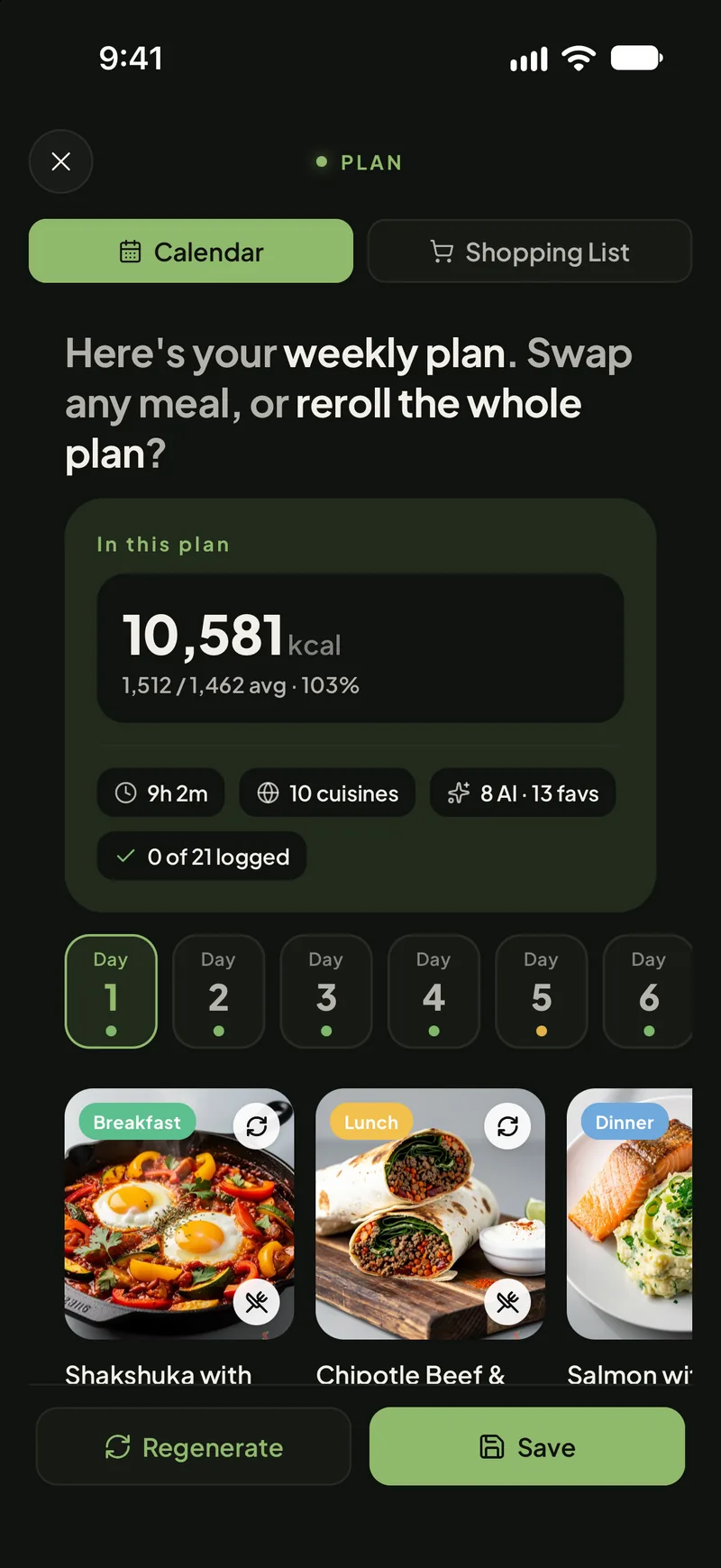
- Swoodie: AI generates a weekly plan from your calorie goal and preferences, and is not capped to a fixed library — Chef AI can write new recipes to fill gaps.
Shopping list quality
- Mealime: a consolidated grocery list with aisle grouping — one of its strongest features.
- PlateJoy: integrates with Instacart for direct grocery ordering — a real time-saver if you shop online.
- Swoodie: a merged shopping list across the whole week that deduplicates overlapping ingredients, without requiring a third-party grocery service.
Calorie and macro tracking
- Mealime: nutrition info per recipe, but no daily tracking log. It helps you plan balanced meals; it doesn’t record what you actually ate.
- PlateJoy: calorie and macro targets are built into the plan, but there is no logging of meals outside it.
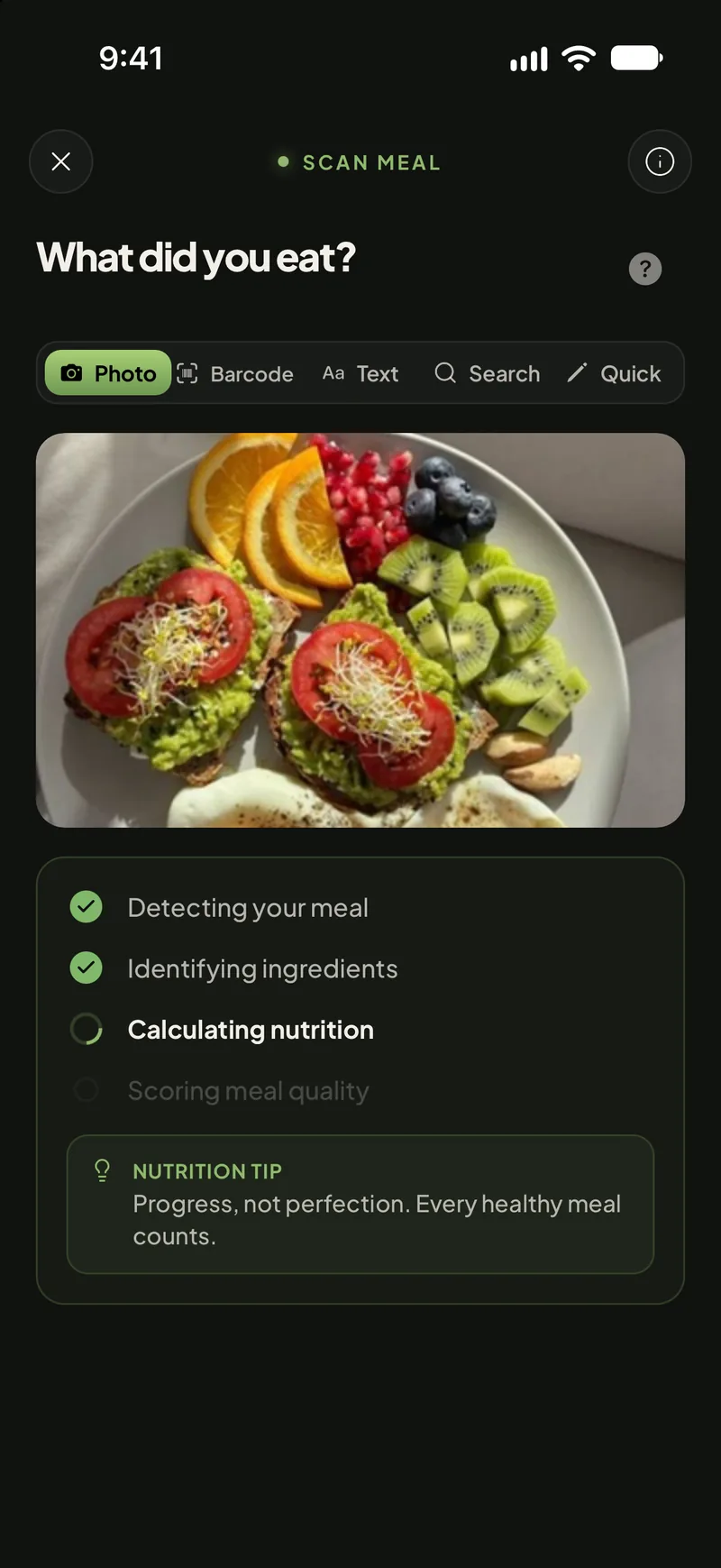
- Swoodie: a full daily log — planned meals, restaurant meals via photo scan, packaged foods via barcode, and anything you cook.
The plan-first problem
This is the heart of the comparison. Mealime and PlateJoy are at their best when you follow the plan exactly. The trouble is that real weeks rarely cooperate — a late meeting, takeout, a dinner at a friend’s, a partner’s leftovers. When you deviate, a plan-first app simply loses the thread: that meal isn’t in the plan, so it isn’t anywhere.
Swoodie treats the plan as a starting point, not a contract. Off-plan meals still land in your log through photo scanning and barcode lookup, so a messy week is still a tracked week. If you are the kind of planner who follows through perfectly, this matters less. If you are honest that you won’t, it matters a lot.
Couples features
- Mealime: supports multiple servings and family portions, but no shared decision tool.
- PlateJoy: built around an individual profile; partners can hold separate accounts, but plans aren’t generated jointly.
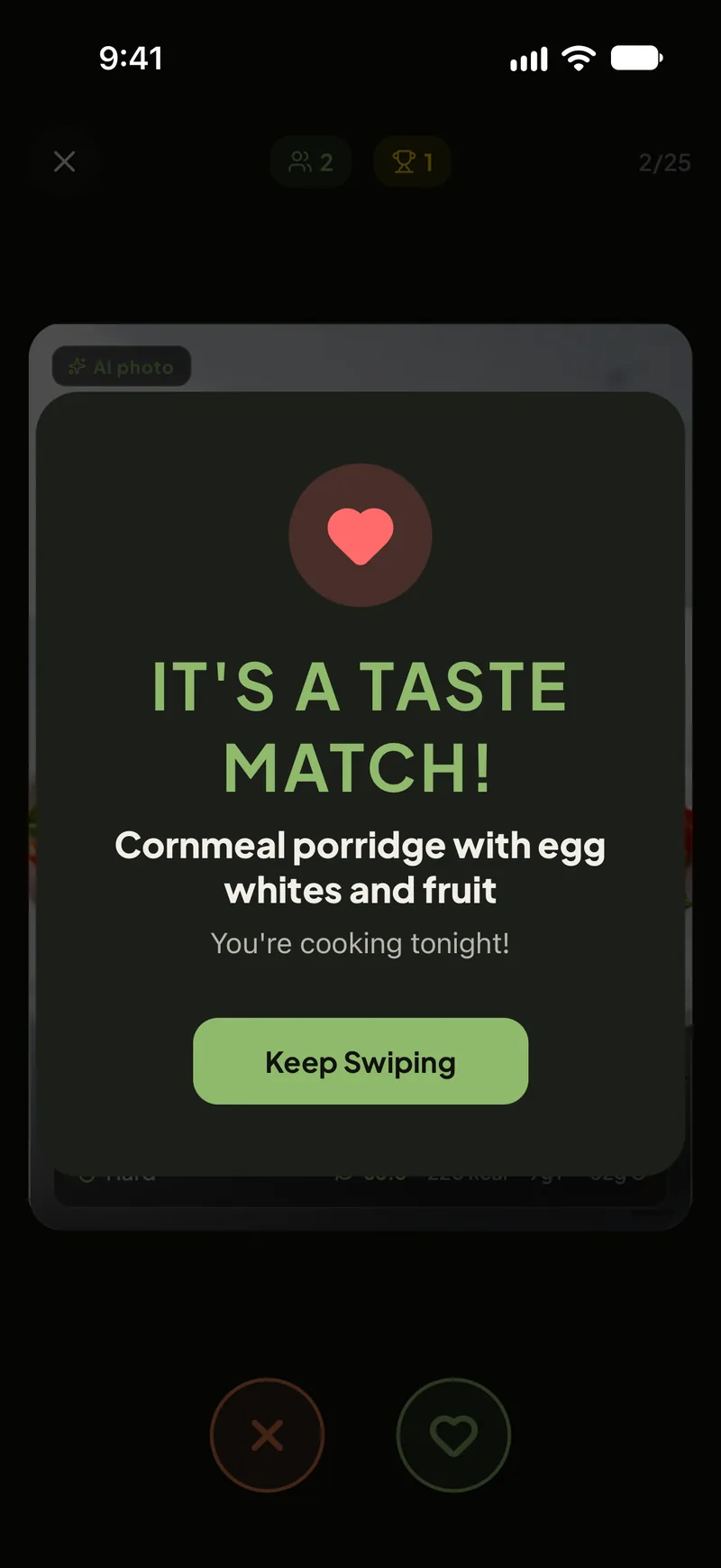
- Swoodie: Swipe Together — both partners swipe meal options independently and the app surfaces what they agree on, removing the daily “what do you want?” loop.
Pricing: and the two-year cost
- Mealime: had a free core plan and Pro at around $5.99/month. Since its shutdown notice, Pro subscribers are no longer charged, and the app closes on October 21, 2026.
- PlateJoy: $99/year, or $69 for six months, after a 10-day trial. No meaningful free tier. You are paying for the dietitian-reviewed personalisation.
- Swoodie: a free tier with the full recipe library and basic tracking, plus a 10-use free trial of the AI features; Premium at $9.99/month or $59.99/year with a 7-day trial on yearly.
Mealime no longer has a two-year cost to compare. Over two years that is about $120 for Swoodie Premium; PlateJoy came to around $198 before it shut down. It was the most expensive by a clear margin — the question was whether dietitian-reviewed personalisation was worth roughly $78 more than Swoodie over two years. For some people with specific medical or dietary needs, it genuinely was.
The honest trade-offs
Honestly: PlateJoy’s personalisation is deeper than Swoodie’s, and the registered-dietitian review is a real form of trust an AI generator doesn’t replace; if your diet is medically constrained, that is worth paying for. And Mealime was simply cheaper and more focused; if all you wanted was a clean plan and an aisle-sorted shopping list, Mealime did that with less app to learn — until it announced it would close on October 21, 2026. Swoodie’s advantage is the whole loop (plan, cook, track, decide together), not being the most precise planner in isolation.
Which one to choose?
- Coming from Mealime before it closes on October 21, 2026: Swoodie — save your Mealime recipes into it first.
- Dietitian-reviewed personalisation and Instacart ordering: PlateJoy did this until it closed in July 2025.
- AI-generated plans plus calorie tracking and recipe generation: Swoodie.
- You and a partner need to agree on meals: Swoodie — Swipe Together is unique here.
- You often deviate from the plan: Swoodie handles off-plan meals through photo and barcode logging.
A quick scenario
The optimistic planner. Every Sunday you build a perfect week. By Wednesday a work dinner and a tired Tuesday have knocked two meals off it. With Mealime or PlateJoy those two meals vanish from the record. With Swoodie you photograph the work dinner, scan the rushed snack, and the week is still honest: which is the difference between a plan you measure against and a plan you quietly abandon.
Deeper one-on-one breakdowns
Swoodie vs Mealime · Swoodie vs PlateJoy · All alternatives
Outside this comparison
Swoodie has expanded since these head-to-head comparisons were first written. A 2026 update added an intermittent fasting tracker with six protocols (12:12, 14:10, 16:8, 18:6, OMAD, custom; the first five fasts are free, unlimited with Lite or Premium), Fasting Coach quips, and Fast Together — pair with a partner and each of you can watch the other’s fast run live and send encouragement inside it (how it compares to the fasting apps). If fasting is part of your routine or you’re cooking with a partner, also see the how-to guide for couples and the intermittent fasting use case page. Wellness Journey adds 2-person daily accountability separate from Swipe Together (recipes) or Nest (household). A later update also added ready-made 7-day Diet Plans you load and tweak — see free 7-day diet meal plans and how Swoodie compares in the best ready-made diet plan apps. Another added Product Check — scan any product’s barcode for an instant 0–100 quality score, additive flags, and cleaner swaps (scanning and the score are free). A further update pushed the tracking side further — an estimated Glycemic Load on scanned meals (a blood-sugar-impact signal, not a medical reading), diet-style macro targets (keto, low-carb, high-protein, low-GI), and Routines for meal and cooking reminders — the parts a pure recipe manager still doesn’t touch.
Try Swoodie free on iOS or Google Play — no account required to start, and Premium is free for 7 days on the yearly plan.
Frequently asked questions
Which meal planner is best — Mealime, PlateJoy, or Swoodie?
Both of the other two are closing: PlateJoy shut down in July 2025, and Mealime closes on October 21, 2026. Mealime was best for fast, clean weekly plans from a curated library; PlateJoy suited people who wanted dietitian-reviewed personalization. If you are choosing today, Swoodie gives you AI-generated plans plus calorie tracking and recipe generation in one app.
Do Mealime and PlateJoy track calories?
Not really — Mealime shows nutrition per recipe but has no daily log; PlateJoy builds calorie targets into the plan but does not log meals outside it. Swoodie keeps a full daily log, including photo and barcode scanning for unplanned meals.
How much does PlateJoy cost?
PlateJoy was $99/year, or $69 for 6 months, with a 10-day trial and no meaningful free tier, before it closed in July 2025. Mealime had a free core plan plus Pro at around $5.99/month; Pro subscribers are no longer charged ahead of its October 21, 2026 shutdown. Swoodie has a free tier plus Premium at $9.99/month or $59.99/year.
Written by
Daniel
Founder of Swoodie
Hi, I'm Daniel — the person behind Swoodie. I'm based in Poland and have been working on Swoodie solo since January 2026. I write about nutrition tracking, intermittent fasting, recipe planning, and cooking together with a partner — everything tested in my own kitchen with the app I'm building.
Related articles
Best Free Meal Planner Apps in 2026 (That Are Actually Free)
9 min read
An honest roundup of the best free meal planner apps in 2026 — which ones let you plan a week without paying, where the free tier really ends, and how Swoodie's new free build-your-own planner compares.
Eat This Much vs Plan to Eat vs Swoodie (2026): Which Meal Planner Wins?
8 min read
Eat This Much auto-builds plans, Plan to Eat organizes the ones you choose, and Swoodie does both — with a free build-your-own planner and calorie tracking. An honest 2026 comparison.
Free 7-Day Diet Meal Plans: Keto, High-Protein, Paleo & More (2026)
7 min read
A free guide to ready-made 7-day diet meal plans — keto, high-protein, vegan, Mediterranean, paleo and more — how to use one, and how to tweak it to taste and auto-build a shopping list.
Best Ready-Made Diet Plan Apps in 2026
7 min read
What to look for in a ready-made diet plan app in 2026 — and an honest roundup of how the main options compare, from one-time cookbooks to plan-plus-tracking apps like Swoodie.